
CNC Turned Parts Factory
Where is the factory, and what is its legal registration?
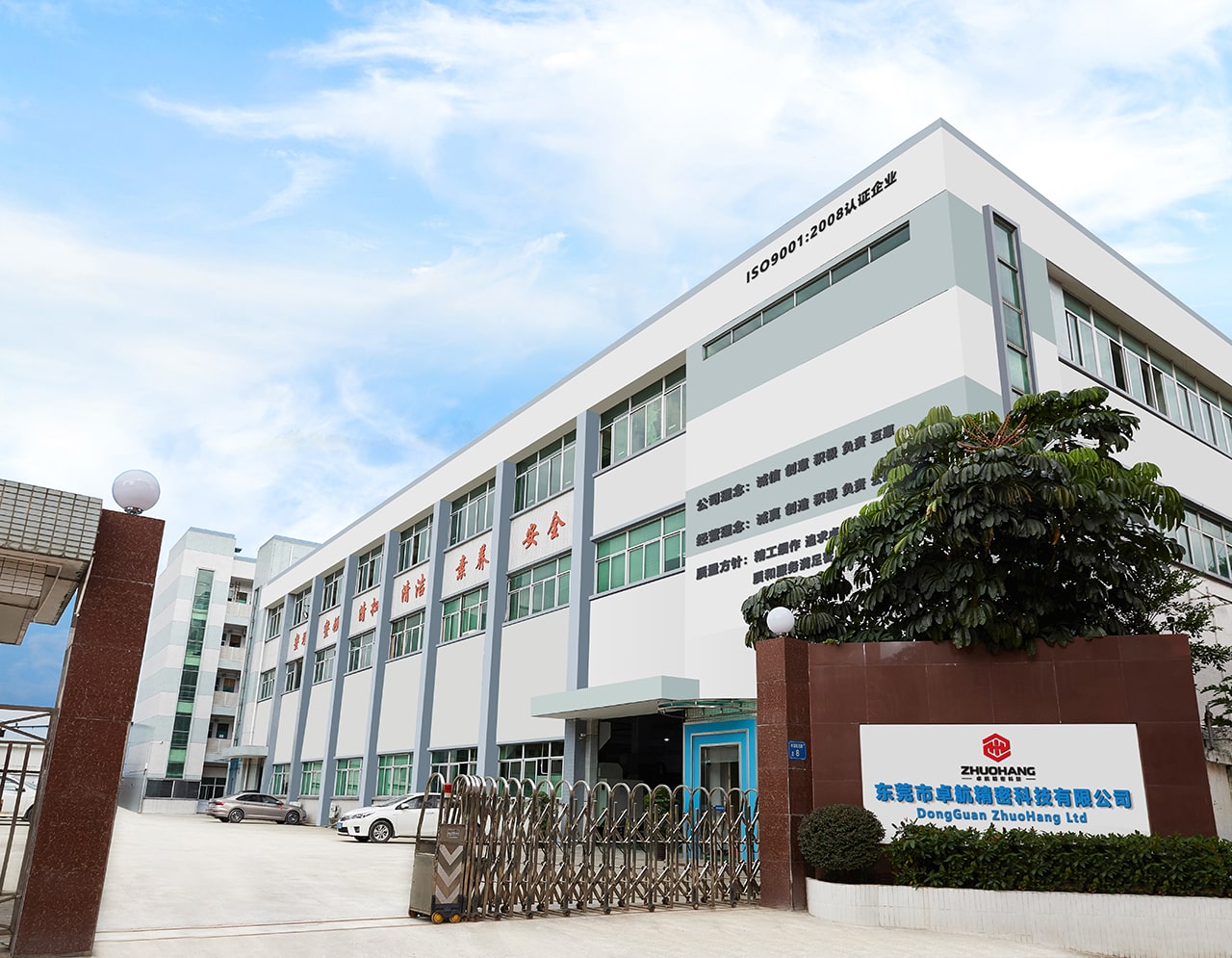
The facility sits at No. 8, Shuibian Songyuan Road, Hengli Town, Dongguan, Guangdong, China 523470. Behind that address is a legal entity you can verify: Dongguan Zhuohang Ltd, registration number 91441900MA4UWT6X39, founded in 2005. A verifiable legal entity is the first entry in any compliance file — it confirms you are dealing with a real, incorporated manufacturer rather than a brand shell or a forwarding address.
The address and the registration number do different jobs, and a complete file carries both. The address tells you where the work happens; the registration tells you who is legally bound by it. A factory that gives you both, and invites you to verify either, is treating due diligence as part of the sale. A factory that gives you a city and a first name is asking you to buy on geography and trust.
The two checks also cross-reference each other. A registration number resolves to a legal entity at an address; if the address on the certificate does not match the address on the invoice, or the entity on the certificate differs from the entity on the invoice, you have found a discrepancy before any money moves. Matching the address, the name, and the number is the cheapest of all the factory checks.
What certifications does the factory hold?
Three certificates, with numbers rather than logos, so each can be checked with the registrar, URS.
| Standard | Certificate number | Scope |
|---|---|---|
| ISO 9001:2015 | 116024/A/0001/UK/En | Machining of metal parts |
| IATF 16949:2016 | 131941/A/0001/SM/En | Manufacture of CNC metal machining parts (excludes product design, Clause 8.3) |
| ISO 14001:2015 | 116024/B/0001/UK/En | Environmental management related to machining of metal parts |
Honest scope note: IATF 16949 excludes product design under Clause 8.3 — this is a build-to-print factory. The scope is stated plainly so your compliance file is unambiguous about who owns design responsibility.
The certificates are the factory's answer to the question "who has checked you, and for what." Each number is a record in the registrar's database, and each scope is a statement of what the audit covered. Reading them together gives you the factory's compliance profile in three lines: what it can make, to what process standard, and how it manages the environmental side. That profile is the starting point of the whole due-diligence file.
The build-to-print boundary is the part to read twice. It says the factory makes to your print and does not own design, which is a boundary that keeps the compliance file clean: the factory's responsibility stops at manufacturing, and the design stays yours. A factory that states this plainly is one whose compliance you can map; one that blurs it is one whose compliance you cannot.
How do you verify the factory is real before ordering?
The compliance due-diligence on a factory runs in a fixed order, and each step removes one unknown. First, the certificate numbers — verified with the registrar. Second, the legal entity — name and registration number. Third, the documentation — material certs, CMM reports, SPC charts. Fourth, the floor — a live walk to confirm the system runs in practice, not just on paper.
- Certificate numbers — check with URS, not just logos.
- Legal entity — Dongguan Zhuohang Ltd, 91441900MA4UWT6X39.
- Documentation — material, inspection, SPC, APQP/PPAP.
- The floor — a live walk to confirm the system runs in practice.
How many machines and people run the facility?
The facility runs 100+ production machines — milling, turning, mill-turn, and grinding — plus 20+ inspection instruments, staffed by 100+ people with 80%+ skilled technicians and 60% holding 5–10 years on the job. Workforce depth is a compliance signal in itself: a certified system is only as stable as the people running it, and a senior workforce holds the process in control.
The machine count and the headcount are the two sides of the same question: can this facility actually produce what it is quoting, and will the process stay stable while it does. Machines without enough skilled people are underused; people without enough machines are underworked; either mismatch shows up eventually in quality or delivery. A facility that states both — a hundred-odd machines, 100+ people, with a skilled majority — is describing a floor that can both make the parts and hold the process.
The workforce depth is also a stability signal that no certificate fully captures. A certified system is run by people, and a senior team that has held the process for years is the difference between a system that survives turnover and one that falls over when a key operator leaves. That kind of depth is worth asking about directly.
What compliance documentation does the factory provide?
Compliance is proven by documents. The factory provides material certificates with XRF verification, CMM inspection reports, SPC control charts, and — for automotive programs — APQP/PPAP evidence including a process flow chart, a control plan with critical characteristics and inspection frequency, a PFMEA with RPN and corrective actions, and environmental control procedures. Each document is a link in the chain that connects your part back to its material, process, and inspection.
The documents are the factory's compliance made portable. When you request the file and it comes back complete — material certificates, CMM reports, SPC charts, and APQP/PPAP evidence where required — you are receiving the system in paper form, ready to hand to your own auditor. When it comes back thin, you are learning where the system's paper trail stops, and that is itself a finding.
Ask for the file before you place the order, not after. A factory that can produce the full package up front is one whose documentation is live and current. A factory that needs weeks to assemble it is one whose documentation may exist only as a blank template waiting to be filled in for your order.
How does the factory's environmental compliance stack up?
ISO 14001:2015 (116024/B/0001/UK/En) covers environmental management related to machining of metal parts. The documented evidence includes noise, waste, water, and air pollution control procedures — the environmental side of the compliance file that buyers increasingly require. That certification, with its own verifiable number, means environmental management is audited, not just stated.
The environmental certificate is the part of the file that used to be optional and is now standard in serious sourcing. Buyers in regulated markets increasingly have to prove not just that their part is made to spec, but that it was made under controlled environmental conditions. A factory with ISO 14001 — its own number, its own scope, its own audit — gives you that proof in a verifiable form, rather than a sentence about being green.
Read the scope of the environmental certificate the same way you read the quality one. Here it covers environmental management related to machining of metal parts, which means the documented controls — noise, waste, water, air — sit inside the audited system. That is the environmental half of the compliance file, and it closes the loop on the parts the quality certificates do not touch.
Can I visit or verify the factory before ordering?
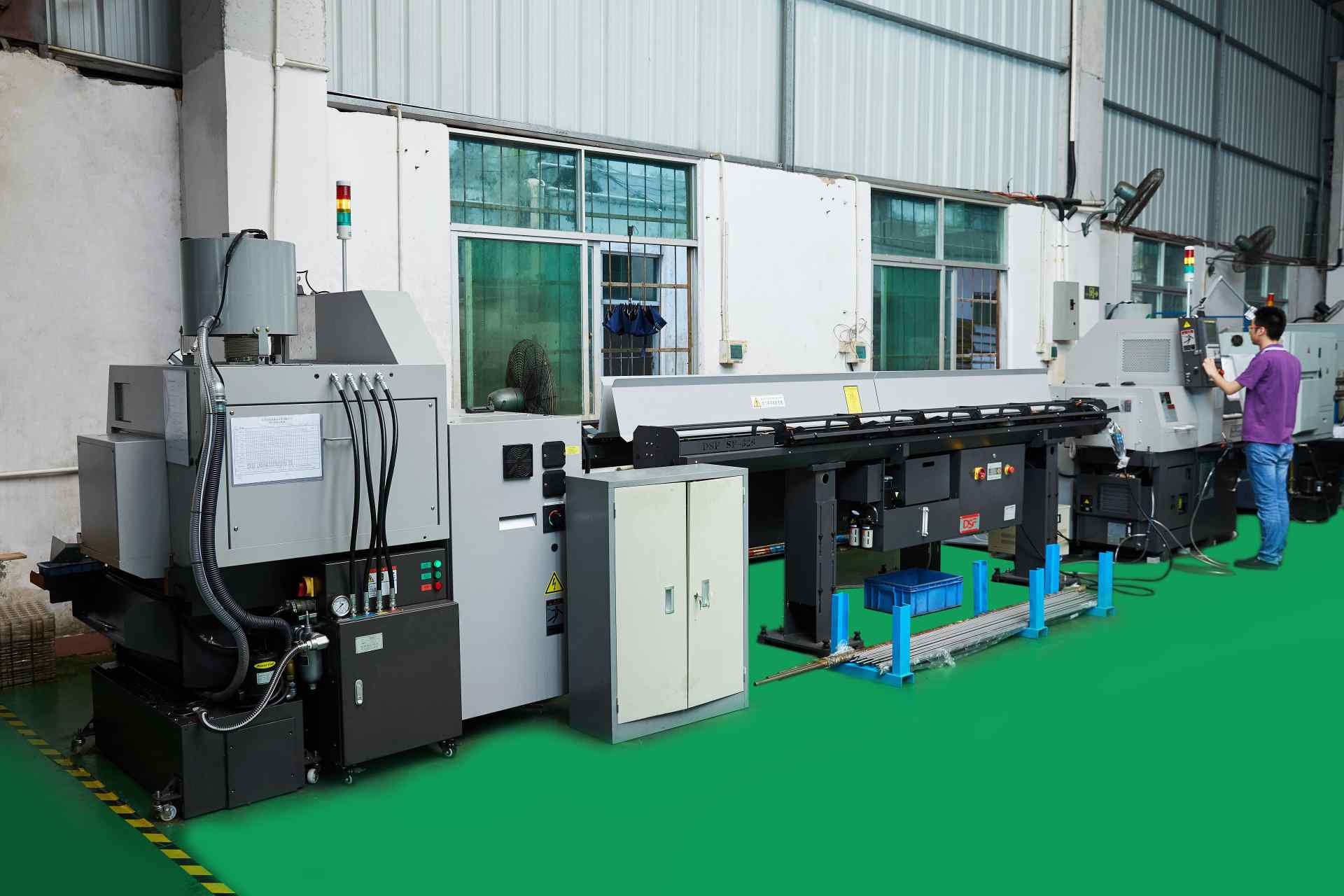
Yes. A factory visit is welcome, and a live video walk of the floor and inspection room is available for buyers who cannot travel. The purpose is to verify the machines and the quality system yourself, because compliance that only exists on paper is not compliance. A factory that shows its floor and its documentation is one whose file you can close with confidence.
The visit is the step where the paper meets the floor, and a factory that welcomes it is a factory that has nothing to hide. A live walk of the machines, the inspection room, and the calibration log confirms that the documents describe a real operation, and a video walk does most of the same work for you who cannot travel. The key is that the walk is live: a pre-recorded tour is a brochure, while a live walk is a check.
Even if you never step on a plane, the invitation itself is information. A factory that offers the walk without being asked is confident in what you will see; a factory that dodges the walk is telling you where its confidence ends.
How does the factory keep the compliance file honest?
Honesty is a compliance feature, not a personality trait. The factory states its IATF 16949 scope exclusion, names its outsourced surface-finishing and heat-treatment partners, and documents its material verification — each of which keeps the file accurate about where the real chain runs. A factory that draws its boundaries clearly is one whose compliance you can map to your own requirements, instead of one that quietly over-claims and under-delivers.
The practical value is that you can map the factory's claims onto your own requirements. Where the scope excludes design, you know to keep design on your side. Where a process runs through a partner, you know to audit that partner too. An honest file does not remove the work of due diligence — it just makes the work possible.
What does a certificate prove, versus what the floor must confirm?
A certificate proves a documented system exists and survived a registrar audit. The floor confirms that system runs on real jobs, not just on paper. The two checks answer different questions, and a compliant file needs both — the gap between them is where hidden risk lives.
| Certificate shows | Floor walk confirms |
|---|---|
| ISO 9001 — quality system documented | Inspection records and SPC charts produced per job |
| IATF 16949 — process control, build-to-print | Control plans and PFMEA in use at the machine |
| ISO 14001 — environmental management | Waste, water, and air procedures visible in practice |
A supplier that shows both columns — the certificate and the floor behind it — is one whose compliance file you can close without a second guess.
What questions should you put to the factory before committing?
- Send the certificate numbers and state which registrar issued them.
- Name every process that runs through a partner rather than in-house.
- Show the material verification record for the last job, not a blank template.
- Walk the inspection room live and show the instrument calibration log.
- State the IATF 16949 scope exclusions in writing.
Put the questions in writing and keep the answers in writing. A factory that answers all of them cleanly is one you can move forward with; a factory that answers none of them is one whose compliance is a claim, not a record. The written trail is also your protection — it turns a verbal assurance into something you can hold if the relationship goes wrong.
Why does a verifiable legal entity matter more than a brand name?
A brand name is a marketing decision; a legal entity is a legal fact. Anyone can print a name and a logo, but a registration number is issued by a government and checked against a database, and it binds a specific incorporated company to everything it signs. When the invoice, the certificate, and the legal entity all carry the same name and number, you are dealing with one accountable company. When they differ, you are dealing with a chain you cannot hold.
The check is the cheapest in the file and the one most buyers skip. Ask for the registration number, look it up, and confirm the name and address match what you were given. A factory that is what it says it is will hand you the number in the first exchange; one that is not will start to blur.
How do you confirm the floor matches the paper without traveling?
A live video walk is the honest substitute for a visit. Ask to see the machines running, not parked; the inspection room with its instruments, not a stock photo; and the calibration log on screen, not a summary. A live walk is hard to stage, which is exactly why it is useful — the factory is showing you what it has, in real time, with nowhere to hide.
Combine the walk with the documents and the two check each other. The walk should show the machines and instruments the documents describe, and the documents should describe the floor the walk shows. When both point to the same building, you have confirmed the paper and the floor describe the same factory.
What does the factory's founding year tell you about risk?
Founded in 2005, the factory has run long enough to have outlived the shops that close after their first downturn. Longevity is not a certificate, and it is not a substitute for one, but it is a signal that the operation has survived customers, audits, and economic cycles, which a brand-new shop has not yet had the chance to prove. A long track record is the difference between a factory that has held a process for years and one that is still learning it.
It also means the certificates are not the first set. A shop that has been audited and re-audited over years has a compliance history, not just a compliance snapshot. That history is part of what you are buying when you file the factory's records.
How do you turn a factory file into a go / no-go decision?
The file should end in a decision, not a folder. Run the checks in order — certificate numbers, scopes, legal entity, documentation, and the floor — and mark each one pass or fail as you go. If all five pass, you have a factory you can qualify. If one fails, you have a specific gap to close or a specific reason to walk. The point of the exercise is to replace a feeling about the factory with a list of facts about it.
A go decision built on five verified facts is defensible to your own management, your customer, and a regulator. A go decision built on a brochure and a handshake is not. The difference is the file.
What should you do if the factory's answers do not line up?
When an answer contradicts the file — the scope does not cover your process, the entity on the invoice differs from the certificate, the address does not resolve — stop and ask for the correct document in writing. A factory that closes the gap quickly and cleanly is running a working system; a factory that argues, stalls, or changes the subject is showing you how it will behave when something actually goes wrong.
The gap is rarely the problem; the response to the gap is the test. A compliance file is built one verified fact at a time, and a factory that cannot supply the next fact is one you should not commit to until it can.
What this shop actually runs
Ask for capability evidence and the answer should be specific. The facility behind this guide runs 100+ CNC machines on a 6,800 m2 floor in Dongguan, China, with 100+ staff. The machine list, by category:
- 5-axis machining centres (10+) - Mazak VARIAXIS I-600 (510/910/510 mm travel, 12,000 rpm, 22 kW, 71.6 N·m, 30-tool BT40) and Mazak INTEGREX I-250H S (B-axis 0.0001°, 24 kW, 124 N·m, 38-tool HSK-A63). Designed for compound-angle parts, single-setup multi-face prismatic work, and aerospace fittings where datum transfer loss is unacceptable.
- 3-axis / 4-axis machining centres (50+) - Brother SPEEDIO S500Z2N / S700Z2N (10,000 rpm, 14/21-tool ATC, 0.7 s tool-to-tool, Z-axis 2.2 G) and Mazak VCE-430A L / VCE-570C L (10,000 rpm, 118 N·m, 24-tool ATC). Designed for prismatic parts, plates, brackets, housings.
- Swiss-type turning centres (10+) - Citizen Cincom A20-3F7 (Φ20 mm, 10,000 rpm), TSUGAMI B0206-III / B0205-III (Φ20 mm, 0.1 µm), STAR SR-32JII / SR-32J Type N (Φ32 mm, 8,000 rpm). Designed for long, slender rotational parts at ±0.002 mm.
- CNC turning centres (20+) - HEADMAN T70M/1250 (720 mm swing, 117 mm bore, 3,000 rpm, BMT75 12-station turret). Designed for shafts, bushings, flanges up to ±0.002 mm.
- Wire EDM (5+) - Sodick AQ535L (550/350/300 mm travel, ±20° taper, 800 kg workpiece). Designed for hardened tool steel, internal splines, sharp internal corners that milling cannot reach.
- Inspection: Hexagon CMM + 20+ gauges - Hexagon CMM for coordinate measurement, plus vision system, profilometer, hardness tester, coating thickness gauge, XRF for material verification. The 10:1 rule (gauge 10x more accurate than the band) is applied to every feature.
- Machine highlights - VARIAXIS I-600: one-setup multi-face 5-axis + MAZA-CHECK auto-calibration; INTEGREX I-250H S: DONE-IN-ONE mill-turn, B-axis 0.0001° + Ai thermal shield; SPEEDIO S500Z2N / S700Z2N: Z-axis 2.2 G + 0.7 s ATC; Swiss-type: guide-bush switchable + 0.1 µm resolution.
Tolerances held: milling ±0.003 mm, turning ±0.002 mm, grinding and wire EDM ±0.002 mm. Capability: Ppk >= 1.67 initial and Cpk >= 1.33 in production on key characteristics.
Certifications: ISO 9001:2015 (116024/A/0001/UK/En), IATF 16949:2016 (131941/A/0001/SM/En, clause 8.3 design excluded, disclosed openly) and ISO 14001:2015 (116024/B/0001/UK/En), issued to Dongguan Zhuohang Ltd, USCC 91441900MA4UWT6X39, established 2005.
Service area: Austria, Belgium, the Czech Republic, Denmark, France, Germany, Greece, Hungary, Ireland, Italy, the Netherlands, Spain, Sweden and the United Kingdom in Europe; Brazil, Canada, Mexico and the United States in the Americas; China, Israel, Japan, Singapore and Sri Lanka in Asia; Australia and New Zealand in Oceania; and South Africa in Africa — built in China, shipped worldwide.
Contact: Felipe Iglesias, [email protected], +86 13126536955.
Run the compliance due-diligence on this factory.
Send your drawing to [email protected] or call +86 13126536955 — certificate numbers and documentation in writing.
Frequently Asked Questions
Where is the factory located?
No. 8, Shuibian Songyuan Road, Hengli Town, Dongguan, Guangdong, China 523470. It is a 6,800 m² facility founded in 2005, with 100+ production machines and 20+ inspection instruments.
What is the factory's legal registration?
The legal name is Dongguan Zhuohang Ltd, registration number 91441900MA4UWT6X39, founded in 2005. A verifiable legal entity is the foundation of any compliance due-diligence file.
What certifications does the factory hold?
ISO 9001:2015 (116024/A/0001/UK/En), IATF 16949:2016 (131941/A/0001/SM/En), and ISO 14001:2015 (116024/B/0001/UK/En). IATF 16949 excludes product design under Clause 8.3 — a build-to-print operation.
Can I visit or verify the factory before ordering?
Yes. A factory visit is welcome, and a live video walk of the floor and inspection room is available for buyers who cannot travel. The purpose is to verify the machines and the quality system yourself.
How many machines and people run the facility?
100+ production machines — milling, turning, mill-turn, and grinding — plus 20+ inspection instruments, staffed by 100+ people with 80%+ skilled technicians and 60% holding 5–10 years of experience.
What compliance documentation does the factory provide?
Material certificates with XRF verification, CMM inspection reports, SPC charts, and APQP/PPAP evidence including process flow charts, control plans, and PFMEA — the documentation behind the compliance claim.
Continue reading: CNC Turned Parts Services · CNC Turned Parts · CNC Turned Parts Quality Control
Standards referenced on this page
- ISO 14001 — Environmental management systems — Requirements with guidance for use
- ASTM A582/A582M-12 — Standard Specification for Free-Machining Stainless Steel Bars
- IATF 16949:2016 — Automotive quality management system standard