
CNC Turned Parts Lead Times: What Drives Them and How to Plan a Date You Can Verify
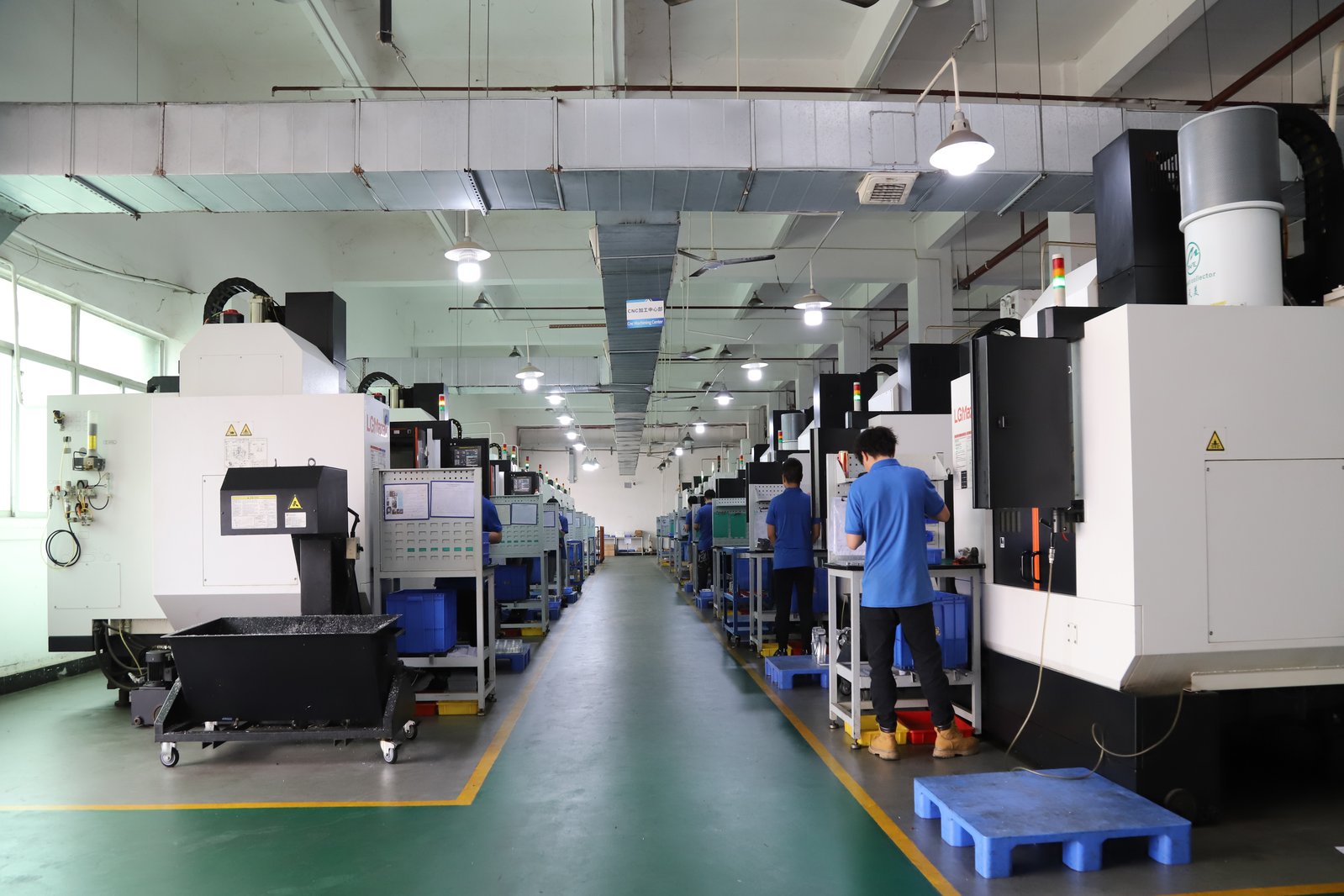
A delivery date on a quote for CNC turned parts is a claim, as open to question as the tolerance and the price beside it. Ask five shops how long it will take, and you will get five numbers built on five different definitions of "it." This guide gives buyers the machinery behind a CNC turned parts lead time: the four clocks that run on every turning order, why quantity and material move the calendar in unexpected ways, and how to turn a vague promise into a dated commitment you can check when the order is placed. By the end, you will be able to tell a planned date from a hoped-for one.
What does a quoted CNC turned parts lead time actually cover?
A lead time on turned parts is not a number; it is a chain. Every turning order runs through the same sequence — drawing review, material, programming and tooling, first article, production, inspection, secondary work, packing, freight — and the quoted date is only as honest as the weakest link in that chain. When a shop quotes "four weeks," it rarely means four weeks of turning. It means the estimated sum of steps, some of which the shop controls and some of which it only waits on.
Think of the calendar as four clocks running side by side. The material clock starts when the bar stock is ordered or pulled from stock. The machine clock starts when the job enters the queue and the setup begins. The verification clock runs while the first article is inspected, the batch is checked, and the reports are written. The freight clock runs from the moment the parts leave the dock. Your ship date is not the sum of these clocks — it is the slowest one. A job with a two-day cutting time and a six-week material wait is a six-week job, and no amount of spindle speed changes that.
That is the first thing to establish with any supplier: which clock is running when you are told a date. The phrase "once material is in" changes a promise from an absolute to a conditional, and the condition needs its own date. A serious quote names the clocks separately — material arrival, first article, batch release, shipment — so you can see where the calendar actually sits. On this floor, that habit is part of the same discipline that puts a mill certificate and an XRF check behind every incoming lot of bar, and a CMM report behind every first article. A date you cannot decompose is a date you cannot verify.
Why can a 10,000-piece turning order ship no later than a 500-piece run?
This is the question that surprises buyers most, and it is the one where turning genuinely differs from milling. A CNC turned part is a small axisymmetric body produced by a fast, repeatable process. Cycle times on single-spindle turning commonly run from seconds to a couple of minutes per piece, and modern machines run bars through an automatic feeder so the spindle rarely stops for a human. That changes the arithmetic of quantity entirely.
Work the example yourself. A turned part with a 20-second cycle, running 10,000 pieces, adds roughly 56 spindle-hours of work. On a bar-fed machine that runs unattended overnight, that is about three days of machine time, not three weeks. Cutting time is rarely what sets the calendar on a high-volume turning order. What sets the calendar is the fixed work in front of the run: writing and proving the program, making the tooling and inserts reach the machine, cutting and inspecting the first article, and getting the release signed. That fixed work costs about the same whether you order 500 pieces or 10,000. So a job that was quoted and proven for a competitor's 5,000-piece order can often absorb your 500-piece order on the same schedule, because the proven setup is already running.
The corollary is the one buyers miss in the other direction. A small order does not automatically mean a short lead time, because the small order still pays the full fixed cost of a setup, and if it queues behind a large committed run, it waits for the queue. Ordering 100 pieces does not pull a machine out of a scheduled month. The honest questions are not about piece count. They are about whether the material is on the shelf, when the machine opens, and when this exact job last ran.
There is a tax that grows with quantity, and a supplier should name it: bar changes, tool-wear checks, and in-process sampling all repeat as the run grows. On a 10,000-piece run the operator does not stand at the machine; the schedule reserves time for stopping the bar feeder, checking a diameter, and letting the tool change at its preset limit. These are small line items, but they are the difference between a run-time estimate that holds and one that drifts by a day. Ask for the batch size the quote assumes — a shop that plans bar loads and sampling intervals has a schedule; a shop that multiplies a cycle time by a quantity is quoting from hope.
When does the bar stock set your delivery date instead of the machine?
Every turned part starts as a length of round bar, and the bar is the one input the shop cannot machine faster. Turning is deliberately friendly to certain grades — 12L14 and 1215 steel, 303 stainless, C360 brass are all free-machining alloys that cut quickly, hold a surface, and produce short, broken chips that suit a bar-fed lathe. Those grades are common stock, and a shop with them on the shelf can put material in the machine the same week you sign the order. The same applies to the everyday aerospace and medical workhorses — 6061-T6 and 7075-T6 aluminum, 304 and 316 stainless — which most turning suppliers carry in the diameters that recur on their parts list.
The calendar moves the moment your drawing leaves that familiar range. A less common grade, a nonstandard diameter, or a special condition such as a stress-relieved or pre-hardened bar becomes a procurement event with its own lead time, and that lead time belongs to the mill or the distributor, not to the turning shop. If your part needs a turned diameter held to ±0.003 mm straight off the bar, the shop may also specify ground bar stock, where the outer surface arrives pre-ground to a tight tolerance. Ground bar adds a sourcing step and a cost step before any chip is cut. Ask the supplier to quote material as a named line: the grade, the diameter, whether it is stocked or ordered, and the date it lands in the receiving bay.
Material verification runs on that same clock. This shop's documented practice is to XRF-check every incoming lot against its mill certificate before the bar reaches a machine — the certificate says what the lot claims to be and the reading says what it is. That check takes hours, not weeks, but it is a gate that exists because the parts, and the records that ship with them, are only as real as the starting bar. When you compare two suppliers, the one who can name your material's arrival date and show you its receiving check has a schedule; the one who says "we'll order it when the order comes in" has a hope.
Why is first-article release the date that controls a turning schedule?
On a turning order there are two ship dates, and conflating them is where most scheduling errors start. The first is the date the first article is cut and released; the second is the date the production batch ships. For high-volume turning, the gap between them is the part of the schedule that actually matters, because everything after release runs on a fast, unattended clock while everything before it runs on human time: programming, tooling, setup, inspection, and the back-and-forth when a dimension misses.
A first article on a turned part is not a formality; it is where the tolerance claim becomes evidence. The shop cuts one piece or a short pilot, then proves the critical diameters, roundness, and surface finish with calibrated instruments — a CMM report for the geometry, a roughness reading for the finish, and for key characteristics a process-capability view against a Cpk target of ≥ 1.67. What the drawing said the process can hold, the first article shows it did hold. That is the release: the point where the setup is locked, the report is written, and the machine is cleared to run the balance of the order without re-litigating the print.
When the first article needs your eyes, the verification clock grows. Some buyers want to review the report or hold a sample before the batch runs; some want a full PPAP submission for automotive work. Each of those is a scheduled stop in the calendar, and each one is faster when the drawing was complete on day one. A dimension called out as a general tolerance on your print becomes a question to the shop, and questions travel at email speed while the machine sits at setup speed. The practical move is to agree in advance what releases the batch: your written approval, the supplier's first-article report, or a stated time limit after the report is sent. A schedule with a named release condition is a schedule; one that says "we'll send you a sample" is an open loop. The tolerance side of this same gate is covered in the realistic tolerance and finish bands for turned parts, including when a feature pushes a turning job into grinding.
What do knurling, grinding, plating, or heat treatment add to the calendar?
Rarely does a turned part ship straight off the lathe. The features that turning cannot make — a hex milled on the end, a cross-drilled hole, knurling for a grip, a thread rolled for strength — become secondary operations, and each one is a handoff with its own clock. The single biggest scheduling question on any turned parts order is not whether the lathe can make the part but where the part goes after the lathe. If the secondary step runs in-house, it moves from machine to machine inside one production floor with one set of priorities. If it is outsourced, the part leaves the building, and its return date depends on a supplier you do not control.
Some secondaries are calendar-neutral if planned, and calendar-eaters if discovered late. Vibratory deburring and passivation are batch processes measured in hours to a day. Plating and anodizing are job-shop services with their own queues; a nickel or hardcoat layer looks like a one-day step but often waits on a plater's schedule. Heat treatment can add a cycle of days for the treatment itself plus any straightening or post-heat machining your tolerance requires. And the boundary case is grinding: when a feature needs ±0.002 mm or a finish below what a single-point tool leaves, the part moves to a cylindrical grinder, and grinding is a slower, more deliberate process than turning — a schedule that quietly assumes a lathe can hold everything will meet that boundary late.
Because this site's services map is built around documented, verifiable handoffs, the service page is a useful template for what to ask any supplier: which secondaries run in-house, which run at named partners, and what record accompanies the part when it returns — a cert, a report, a coating thickness reading. Every handoff on that list is a place where a promised date can leak. Put the secondary work on the timeline as its own dated line, not as a tail item after "machining complete." A shop that can show you the route — lathe to deburr to plater to inspection to packing — has priced the real calendar. A shop that quotes one number for everything has not looked past the lathe.
How much of your turned parts lead time is documentation, not cutting?
Ask a quality system what it does to a calendar and the answer is uncomfortable: on a documented order, the paperwork can take as long as the machining, and it should, because the paperwork is what makes the parts usable. Every batch on this floor ships with material certificates tied to the lot, a CMM report on the checked dimensions, and SPC data where key characteristics are controlled — the records that let your receiving dock trust the box without re-inspecting every piece. Writing those records is real work scheduled on real time, and a supplier who does not schedule it is a supplier whose "paperwork" arrives late or arrives invented.
Automotive work puts the heaviest load on the verification clock. Under the IATF 16949 (product design excluded) system that runs this floor, a production part approval process submission — process flow, control plan, PFMEA, capability studies, and the rest of the PPAP package — is a deliverable with its own lead time, and it gates the start of production rather than the end. IMDS reporting for material declarations follows the same logic. A buyer who treats PPAP as an afterthought attached to the first shipment will find the calendar moved; a buyer who names the required submission level in the first email gets the documentation clock running on day one instead of week six. The same discipline applies to a simple order: if your industry needs a cert of any kind — raw material, plating thickness, heat treat — say so in the RFQ, because the report is made during the run, not after it.
The documentation clock is also the clock most often used to compress a schedule dishonestly. A shop can always ship parts faster by cutting inspection frequency or writing a looser report, and you will not see the difference until a part fails. That is why the quality evidence behind this facility's claims, and how to read a CMM report or an SPC chart when it arrives, is worth reviewing before you sign anything. A lead time that skips verification is not a shorter lead time; it is a bet with your liability on the table. Hold the line on the records you need, and make the supplier put them on the calendar.
What separates a date that holds from a date that drifts?
Drift has causes, and they are almost never the machine. Look at a slipped delivery date and you will find one of four failures upstream: the material was never ordered or the ordered grade arrived late; the drawing carried a feature that quietly pushed the job into a different process; the first article needed three rounds instead of one; or the verification and documentation steps were never put on the schedule at all. Each of these is visible in the quote before you sign it, if you know where to look.
Read the quote like you would read a certificate — line by line, word by word. A date that holds is built on named material with a named arrival date. It names a first-article date separate from a batch-release date. It states the lot size the schedule assumes and the inspection plan that runs with it. It puts secondary work and documentation on the timeline as dated lines. A date that drifts is built on one round number that covers "everything," with the material as an unstated assumption and the first article as an afterthought. When two shops quote the same drawing, the difference between two weeks and six is usually not speed — it is whether the second shop has a queue in front of you and did not say so.
Capacity honesty is the part of a quote you cannot see on paper. A machine that is already scheduled to a committed customer is a machine you are waiting behind, and no process improvement moves that queue. This is where the physical floor behind the quote matters: a supplier with 100+ production machines across turning, milling, mill-turn, and grinding, running inside a 6,800 m² facility, has scheduling slack that a two-machine shop does not, and the capacity and certificate scope are the verifiable facts behind that claim. When you ask "when can you start?" the useful follow-up is "what is committed on that machine today?" The supplier who can answer with the current load is giving you a schedule; the supplier who answers with a promise is giving you hope.
How do you plan a CNC turned parts order so the promised date is the shipped date?
Planning a turning order to a date you can hold comes down to a short list of moves, and every one of them happens before the purchase order goes out. First, send a complete RFQ: the drawing with tolerances and surface finish called out per the bands that are actually realistic, the material grade with any special condition, the lot size, and your target ship date stated as a date, not a season. A complete RFQ is not politeness; it is what lets the supplier commit to a process instead of guessing at one, and it is the same completeness the cost side of the decision needs, as the buyer's cost model for CNC turned parts makes clear line by line.
Second, ask for the calendar in dated pieces, not as one number. Request four dates in writing: when the material lands, when the first article is cut, when the batch is released, and when the parts ship. Then check the logic between them — material to first article should be days, not weeks, on a stocked grade; first article to batch release should be the time your approval takes plus the inspection window. A supplier who can produce a dated chain is running a schedule; a supplier who gives you a single promise is running on hope.
Third, decide your buffers where the risk actually sits, not where it is convenient. If the material is a special grade, the buffer belongs before material arrival, because that is the clock you do not control. If the part needs grinding or plating, the buffer belongs at the handoff, because that is where queues form. If the feature is tight, the buffer belongs between first article and release, because that is where rounds of correction happen. A blanket "add two weeks to everything" is not planning; it is postponement with a positive attitude.
Fourth, and most important, verify before you commit — the same instinct this site applies to every certificate, every tolerance claim, and every price. Check a recent order with a comparable drawing: did its dated chain hold? Ask what releases the batch and what the inspection plan is. Then ask what happened the last time a date slipped, because the honest answer tells you which clock failed. A supplier who treats a delivery date as a claim to be evidenced, like a tolerance or a material cert, is a supplier whose dates you can plan around. That is the standard to hold, and it is the reason the contact below exists, not to promise you a date in an email, but to put one on a schedule you can verify.
Frequently Asked Questions
How long should a CNC turned parts order realistically take?
There is no honest single number, because the calendar is set by whichever clock runs slowest on your specific order: the material, the machine queue, or the verification steps. What a supplier should give you instead of a single number is a dated chain — material arrival, first article, batch release, shipment — so you can see the assumption behind each link. A useful planning posture is to work in weeks for the fixed work in front of a run (programming, setup, first article) and to ask whether the material and the machine are available now, because those two answers decide whether the order starts this week or next month.
Does a larger order quantity push the delivery date out?
Far less than buyers assume, on a turning process. Cycle times run from seconds to a couple of minutes per piece, and bar-fed machines run unattended, so extra quantity adds spindle-hours rather than calendar weeks — a 10,000-piece run at a 20-second cycle adds roughly 56 machine-hours of work. The calendar is dominated by the fixed work of proving the job and the material wait, which are roughly the same at 500 pieces and 10,000. The honest questions are whether the material is on the shelf, when the machine opens, and how the quote's planned lot size and sampling intervals compare with your actual order.
Can any turned parts order be rushed without losing its inspection record?
A schedule can be compressed in the places that are genuinely compressible: a stocked material, a faster freight lane, a first-article review that runs in parallel with batch setup, and a documentation package started on day one. What cannot be honestly compressed is the verification itself. The first article still has to be cut and measured, the batch still has to be sampled, and the CMM and SPC records still have to be written — those records are what make the parts acceptable at your dock. If a supplier offers a dramatically shorter date with the same inspection plan, ask which clock they removed; a date that skips verification is a bet with your liability on it.
Why do automotive turned parts orders carry extra calendar time before production starts?
Because the verification clock starts earlier. Under an IATF 16949 (product design excluded) quality system, a PPAP submission — process flow, control plan, PFMEA, capability studies — is a deliverable that gates the start of production, and IMDS material declarations follow the same logic. The machining itself is no slower; the calendar grows in front of the run, before the first production part is cut. Name the required PPAP level and any IMDS needs in your first email so the documentation clock starts on day one, and treat the PPAP date as a milestone on your schedule, not an attachment to the first shipment.
When is a Swiss-type machine the right choice for a tight date?
A Swiss-type (sliding-head) lathe is the turning workhorse for small, long, or slender parts — guide bushings, pins, medical components, parts where length-to-diameter ratio makes a conventional lathe chatter. It is also a machine whose value is as much about throughput as about geometry: it completes a small part in one pass with bar feed and often a subspindle, which keeps cycle times short and quality consistent. If your part is small and slender and the drawing suits it, a supplier who can run it on Swiss-type equipment has a faster, more repeatable path to the same feature set. Ask which machine family the quote assumes, because that single answer says a lot about the real cycle time and the real schedule.
When should I send the drawing to hold a fixed launch date?
Earlier than feels natural, because the fixed work in front of a turning run — material, programming, setup, first article — happens before production starts, and none of it compresses once the clock is running. Work back from your launch date: reserve time for the first-article release and your review of it, the production run itself, any secondary work and its handoff queue, and a freight buffer that matches your tolerance for risk. Send a complete drawing with tolerances, surface finish, material grade, and lot size so the supplier can commit to a process on the first reply. A drawing that arrives complete lets the calendar start on day one; a drawing that arrives in rounds starts the calendar over each time.
What should a lead-time quote include before it counts as a commitment?
Four dated lines: material arrival, first article, batch release, and shipment. Then the assumptions behind them — the material grade and whether it is stocked or ordered, the lot size the schedule assumes, the machine family that will run the job, the secondary operations and whether they run in-house or at a named partner, and the inspection and documentation plan that ships with the parts. If a quote gives you one round date and nothing else, treat it as a price estimate with a hopeful tail, and ask the supplier to decompose it. A date you can check line by line is a date you can plan around; a date you are simply told is a date you will be told again, later.
Need a verifiable delivery date on your CNC turned parts order?
Send your drawing to [email protected] or call +86 13126536955 — the response comes back as a dated chain, with the material, the process route, the first-article plan, and the documentation package each named on its own line of the schedule.