
Aluminum vs Stainless for CNC Turned Parts: A Decision Table for Rotating Duty
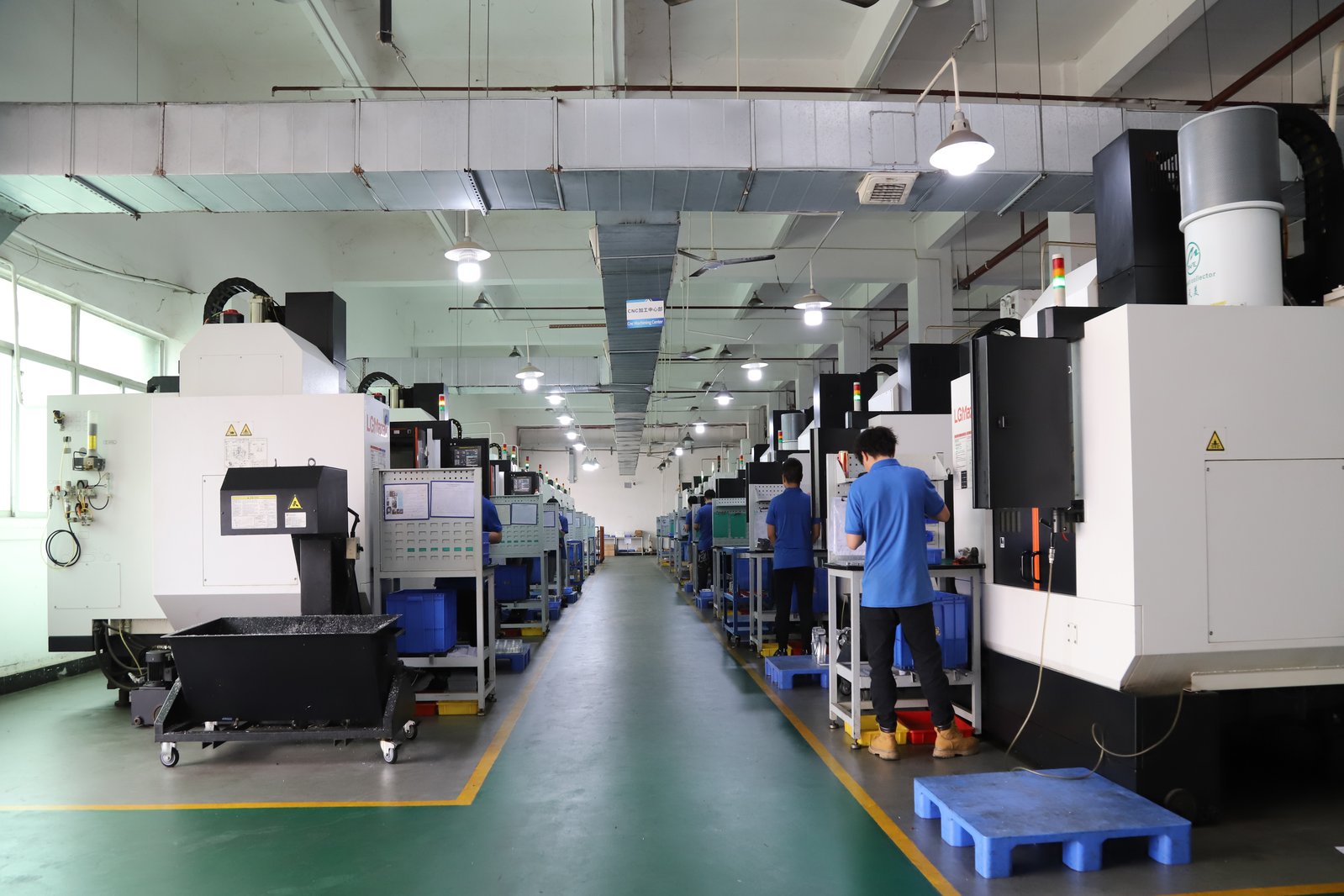
A turned part is a body of revolution, and most of them do more than sit still: they rotate in a bearing, make and break a thread, seal against a counterface, slide past a bushing, or carry fluid through a fitting. On those parts the aluminum-versus-stainless question is answered at a surface — the journal that runs, the thread flank that torques, the seat that seals — and it is answered by the failure mode the surface would hit first. Both metals hold the same tolerance band on this floor: ±0.003 mm on turned diameters, ±0.002 mm where a precision ground pass is part of the route, verified on a CMM with capability tracked at Ppk ≥ 1.67 at the initial study on key characteristics and Cpk ≥ 1.33 on general characteristics. Capability is reported per characteristic: every report names the feature, its tolerance band, the sample size, the sigma method, and the study window. So precision is a tie, and the material decision moves to service. This guide walks a buyer through the turned-part roles that drive the choice, the failure modes each metal owns, what the lathe does to the price, and a decision table you can run against your own part before the RFQ goes out.
What is different about choosing a material for a part that rotates?
A milled part usually fails in its cross-section: a bracket cracks at a fillet, a housing flexes under load, a wall deflects until alignment drifts. A turned part is defined by surfaces that meet other components — a shaft OD against a bearing race, a thread against a nut, a stem against a packing gland, a face against a gasket — so its failure modes live where the part touches its neighbor. Rotation adds contact that a static part never sees. Two identical-looking turned parts can be entirely different materials problems because one spins fast on a dry indoor axis while the other sits in a chlorinated washdown line and is never turned by anything but a wrench.
The roles are easy to catalog because turning makes a recognizable family of them: shafts and spindles, pins and dowels, threaded studs and fittings, bushings and sleeves, valve stems and spools, fluid connectors and unions, plus the spacers, rollers, pulleys, and adjusters that round out most turning orders. What matters for the material decision is not the shape — a lathe cuts all of them from certified bar, the bar-fed turning route this site describes in its turned-parts overview, but the service each one sees at its critical surface. The decision table near the end of this guide is organized that way, because a material verdict that ignores the rotating duty is a verdict about a different part.
Which turned-parts roles live on aluminum, and which belong to stainless before cost enters?
Start with the roles where the environment is mild and the motion is light, because those are the ones aluminum owns without a fight. A spacer, a light roller, a pulley, a fixture pin, or an adjuster that lives indoors, runs dry or lightly lubricated, and never sees aggressive chemistry is a 6061-T6 part: it is a third of the stainless weight, it machines quickly, and it does the job at the lowest number on the quote. The same role in stainless would buy corrosion resistance the part never calls on and stiffness the section does not need — money spent on properties the drawing does not use.
Stainless claims its roles by duty rather than by shape. A valve stem that slides in a packing gland under pressure, a fitting that carries a chloride or chemical medium, a nozzle or connector in a washdown line, a medical or food-contact part that gets cleaned repeatedly — each of those is a stainless part because a coating is not a permanent answer on a surface that moves or a component that must stay cleanable on its own. Between those two ends sits the honest middle: a shaft running in a bushing, a threaded connection that takes real torque, a manifold body in a wet loop. Those roles are decided by the specific mode — wear, galling, crevice corrosion, or the galvanic pair — and they are the rows that carry the weight of the decision table below.
Why do threads — the most common turned feature — fail in opposite directions in each metal?
Threads are where the two metals show their character, because a thread concentrates load on narrow flanks and sees repeated torque in service. The two families fail on threads in opposite directions, and knowing which direction you are exposed to is most of the decision.
Aluminum threads fail by stripping and pull-out. A 6061 internal thread that is torqued repeatedly, or assembled against a harder steel bolt, wears and deforms until the flank gives way. The standard engineering answer is not a different aluminum grade but a different thread design: longer engagement, coarse pitch, a steel threaded insert where the connection is made and broken often, or a thread form designed so the load spreads over more flanks. Aluminum threads are not weak in some absolute sense — they are fine for a one-time assembly at controlled torque — but they are the side of the pair that wears first, and a buyer should plan for that before the first field failure.
Stainless threads fail by galling, which is the opposite mechanism. Austenitic grades such as 303 and 304 are prone to galling when two thread surfaces slide under pressure: the oxide film breaks down locally, the metals cold-weld at the contact points, and the connection seizes or tears before it reaches its designed torque. The failure is not soft metal giving way — it is hard metal welding itself together. The countermeasures are the ones a machine shop knows well: coarse threads rather than fine ones where the assembly allows it, an anti-seize or lubricant on the mating threads, controlled assembly torque, and a surface treatment that keeps the flanks from cold-welding. Passivation does not stop galling by itself, but it does remove the machined-in contamination that makes seizure more likely.
For a buyer the practical rule is short. If your turned part carries a thread that is made and broken repeatedly — a fitting a technician reconnects, a stem that adjusts, a cap that comes off for service — say so in the RFQ and let the drawing decide the defense. On the stainless side that may mean an anti-seize note and a coarse pitch; on the aluminum side it may mean an insert or a one-time-torque assembly. The material that "feels" stronger is not automatically the safer thread.
When does a sealing surface or a sliding stem overrule the rest of the material argument?
Turned parts seal in two ways, and both push the decision toward stainless more often than buyers expect. The first is a static seal: an O-ring seated in a groove, a gasket trapped between two turned faces, a flare or ferrule that seats against a conical surface. The second is dynamic: a valve stem sliding through a packing gland, a spool moving in a bore, a shaft running against a lip seal. Static seals mostly worry about corrosion and surface finish; dynamic ones add wear and galling to the list.
On a dynamic surface, the softness that makes aluminum cheap to machine works against it. A bare 6061 stem or spool sliding against a seal or a counterface wears, and the wear particles then lap the sealing surface it was protecting. Hard anodizing is the aluminum answer where duty is light and the coating is engineered into the fit, but a hard-anodized part needs its growth allowance called out on every critical diameter, and the coating does not survive being the bearing surface under heavy or contaminated duty. Stainless answers the same requirement with the metal itself: a 303 or 316 stem, turned to a controlled surface finish, slides and seals without a coating to wear through. For a sealing face the same logic applies at a lower pitch — a soft face seats well once, and abrades or cold-flows under repeated disassembly, while a stainless face holds its geometry across many service cycles.
The other push toward stainless on sealing parts is that a seal is only as good as the surface under it. A turned face that must hold a gasket or an O-ring is commonly called out at 0.8 µm Ra, and both metals can reach it on a lathe, but stainless holds that finish while resisting the washdown chemistry that a food, marine, or chemical line throws at the same surface. When a part seals and gets cleaned, the material argument is usually settled before the price argument starts.
Where do crevice corrosion and the galvanic couple hide on a turned part, and which metal survives?
Corrosion on a turned part is rarely the flat, obvious kind. It hides in the crevices that turning and assembly create: the root of an internal thread, the groove under an O-ring, the corner between a union body and its nut, the pocket where a ferrule seats. Those are exactly the spots where a protective layer gets scratched during assembly or never fully forms, and where stagnant chloride-bearing fluid sits against bare metal. This is the mechanism that pits "stainless" fittings and corrodes aluminum fittings, and it is why the grade line matters more than the family line.
For aluminum, the honest limit is chloride service. Bare 6061 corrodes where chlorides and aggressive chemicals sit against it, and anodizing helps most where the coating is intact, which is least likely inside a crevice that a threaded assembly scratches on the way in. For stainless, the grade ladder handles the same exposure: 304 resists general corrosion well, while 316 adds 2–3% molybdenum, the element that strengthens the passive film against chloride pitting and crevice attack. That difference is why marine, chemical, and washdown fittings are drawn in 316/316L rather than 304. An XRF spectrometer reading on the bar tells the two apart in seconds by the molybdenum signal, which is why the receiving check described below exists.
The galvanic couple is the second hidden trap, and it appears where a turned part meets a neighbor of a different metal. A stainless fitting threaded into an aluminum manifold, a stainless screw holding an aluminum body, or an aluminum valve connected to a stainless line — in a wet service each of those couples the two metals, and the aluminum side becomes the anode and corrodes preferentially. The fix is not necessarily a change of the whole part: it can be electrical isolation between the two metals, a compatible finish on the aluminum side, or a decision to make the whole wetted path one metal family. What does not work is assuming the two metals can share a wet assembly because each one is corrosion-resistant on its own. Corrosion resistance is a property of a part in its circuit, not of a metal in isolation.
What does the lathe do differently to each metal, and where does the quote gap actually come from?
Aluminum is one of the least expensive metals to machine, and that shows on a turning center in every phase of the cycle. 6061-T6 cuts freely, forms short, broken chips that clear easily from a bore or a groove, holds a fine surface finish over long tool life, and lets the operator run higher spindle speeds. The economics are not subtle: the same turned geometry in 6061 comes back cheaper and usually faster than in stainless, and the gap grows with the amount of material removed.
Stainless is where the lathe earns its keep the hard way. The austenitic grades are gummy at the cutting edge and work-harden where the tool rubs instead of shearing, so the shop runs lower cutting speeds, watches tool life more closely, and changes inserts on a schedule rather than when the finish tells them to. Stringy chips from a tough 304 bar are a real problem in a small internal bore or a deep groove, where they pack and score the surface they just cut. The quote gap between the metals is not a markup — it is slower cycle time, shorter insert life, and the discipline required to keep work-hardening from drifting the dimensions. Within the stainless family the grade ladder moves the number again: 303 exists as the free-machining grade, its machinability improved so turned stainless can stay economical where the application tolerates it. The honest caveat is directional: 303 trades a little corrosion resistance for that machinability, so it suits general-duty turned parts, not the chloride service that calls for 316.
None of this changes the tolerance story, and that keeps the comparison honest. Both metals hold ±0.003 mm on turned diameters when the process is disciplined, so the premium you pay for stainless buys properties, not precision. The number buyers should interrogate on the quote is the one that tells you whether the shop priced the stainless cycle realistically — enough tool changes, no magical cutting speed — because that is the line that decides whether the delivered part holds the drawing. The CNC turned parts cost model on this site walks each of those quote lines in detail.
Which finish belongs on a turned part, and when does an anodize step quietly ruin a thread?
Finishes are where the two metals diverge in a way that matters most on turned features. Aluminum's signature finish, anodizing, adds a layer to every exposed surface — including the threads and bores that a turned part is full of. The layer is the point on a sliding OD, and it is a hazard on a precision feature: anodize growth consumes thread pitch and swallows close-fitting bores, so a thread machined to size and then anodized comes back too tight to gauge. The engineering answer is a callout, not a surprise: name which features get masked, how much growth the finish is allowed on each critical diameter, and whether a precision thread is cut before or after the coating step. Hard anodizing gives the thickest layer and the best wear resistance, which is exactly why it needs the most explicit growth allowance. For threads that take repeated stress, the practical answer on aluminum is often the same as the one above: an insert, or a thread that is masked and left bare.
Stainless finishes work the opposite way. Machining smears free iron and tool material onto the surface — most of it down in thread roots and grooves where it hides — and that contamination is what makes a "stainless" part develop rust spots in service. Passivation removes the free iron so the chromium oxide layer can re-form, and it should be on the drawing whenever a stainless turned part will see moisture, food, or a cleanroom. The distinction matters for buyers because it is invisible: a passivated 316 fitting and an un-passivated 316 fitting look identical on the bench and behave differently in service. Specify it, and ask that it be documented.
Verification is where the finish decision meets the material decision. Every incoming lot of bar in this shop is scanned on an XRF spectrometer and compared with its mill certificate before stock reaches a lathe, so the substitution risks that look identical to the eye get caught at the door: 304 standing in for 316 (the molybdenum signal gives it away), or 6061 standing in for a higher-strength aluminum grade. The finish and the chemistry both travel with the parts — mill certificate, XRF confirmation, and the first-article report that proves the critical diameters landed after the coating, not before it.
Which metal wins your turned part — a decision table for rotating duty and failure mode?
Work down the table as a duty check rather than a menu of metals. Match your part to the row that describes how it is used and what it cannot survive; the material that answers that failure mode is your pick, and the final column states the single fact worth verifying before the order commits.
| What the turned part does in service | Aluminum route | Stainless route | The failure mode that decides it |
|---|---|---|---|
| Spacer, light roller, or pulley on a mild indoor axis | 6061-T6, bare or anodized | Not needed — the duty never calls on it | Mass at speed and cost; aluminum is about a third of the stainless weight at 2.70 vs 8.0 g/cm³ |
| Shaft or journal running continuously in a bushing or bearing | 6061-T6 for light instrumentation duty; 7075-T6 where strength must climb at low mass | 304 or 316 for loaded, continuous running; 17-4PH where strength and wear both climb | Deflection and journal wear under rotating load; stainless is roughly three times as stiff in the same section |
| Threaded fitting or stud made and broken repeatedly, dry assembly | Possible with a steel thread insert and controlled torque | 303 or 316 with anti-seize, coarse pitch, and assembly torque stated | Thread stripping on the aluminum side, galling on the stainless side; say which one your assembly cannot tolerate |
| One-time-torque threaded part in a light indoor assembly | 6061-T6 — threads fine at controlled torque and low cycle count | Only if the environment or the audit demands it | Thread pull-out needs repeated load and a harder counterface; a one-time joint does not create it |
| Valve stem or spool sliding against a seal or packing | Only with hard anodizing and a growth callout on every critical diameter | 303 or 316, turned to a controlled finish, passivated | Sealing-surface wear and galling on the moving surface; a coating on aluminum is a wear system to maintain |
| Fluid connector or union carrying a chloride, marine, or chemical medium | No — anodizing does not protect a scratched crevice in chloride service | 316 / 316L, passivated, crevice-free design | Crevice and pitting corrosion under the seal; the 2–3% molybdenum in 316 is what survives it |
| Manifold, body, or fitting in a wet loop with stainless neighbors | Only with isolation or a compatible finish between the metals | 316 body where the whole wetted path can stay one family | The galvanic couple — aluminum is anodic to stainless and corrodes first in a wet joint |
| Food or pharma turned part that is washed down repeatedly | Rarely — hot water and cleaning chemistry work against it | 316L, passivated, crevice-free, with the surface purpose called out | Cleanability and chemical resistance must live in the alloy, not in a coating |
| Mass-critical rotating component — rotor, high-speed pulley, drone or actuator part | 6061-T6 default; 7075-T6 where the section must shrink | Only when the environment forces it — every kilogram costs energy per revolution | Mass at speed; strength per kilogram is the aluminum argument at its strongest |
Two notes keep the table honest. Precision is deliberately absent, because it is a tie: either material holds the same band when the process is disciplined. And no row is a verdict on a metal in general — it is a verdict on one part in one duty. The same machine can run a 316 fitting for the washdown line in the morning and a 6061 spacer for the dry assembly in the afternoon, and both decisions can be right. If a part seems to sit in two rows at once — it seals and it spins, it carries chlorides and it must stay light — resolve the conflict in favor of the mode that ends the product's life first, and let the quoting engineer see both conditions so the trade-off is made in writing.
How do you put the service profile and the material proof into a turned-parts RFQ?
The table picks a material; the RFQ is what makes sure the material on the drawing is the material in the box, machined the way the drawing assumes. Write the material line as an order, not a family name: "6061-T6, hard anodized, thread masked" or "316L, passivated" tells the shop the grade, the condition, and the finish path in a handful of words, while "aluminum" or "stainless" leaves every one of those decisions to whoever quotes it.
Then describe the service in one plain sentence, because a turning shop reads it against the geometry: "valve stem, slides in a packing gland under line pressure, dry service" or "union fitting for a coastal washdown line, assembled and disassembled weekly." That sentence is what lets the design-for-manufacturing review catch a wrong call before money moves — an anodize growth issue on a precision thread, a galling exposure on a stainless stud, a chloride duty that 304 will not carry. If the review suggests a change, it should come back as a written note on the quote requiring your approval, not as a silent swap.
Finally, make the proof part of the order. Request the material certificate for the lot and the XRF confirmation tying that lot to your order, so a 304-for-316 substitution or a 6061-for-7075 swap is caught at receiving rather than in your assembly. Ask for the first-article and CMM reports on the diameters, threads, and concentricity that carry the function — the records that prove the finish and the tolerance both landed. The tolerance and finish guide on this site sets out which callouts and records a turned part should travel with, and the material–process pair comparison explains when turning from bar is even the right route for the part at all. A quote that names the grade, the finish, the measurement, and the certificate is a quote you can verify; one that names only the price is asking you to trust the metal.
Frequently Asked Questions
Is stainless steel always stronger than aluminum for a turned shaft?
Not in the way buyers usually mean. In the same cross-section stainless is roughly three times as stiff, so a loaded shaft deflects less in steel, that is the honest strength gap. But strength per kilogram runs the other way: 7075-T6 carries more load for its weight than stainless can, which is why mass-critical rotating parts stay in high-strength aluminum. Match the metal to whether the part is limited by deflection or by mass.
Why does anodizing sometimes ruin a threaded aluminum part?
Anodizing adds a layer to every surface it coats, and a thread's pitch has no room for growth. An internal thread machined to gauge and then anodized comes back too tight, and a fine-pitch thread is the first to fail. The fix is to call out which features get masked, how much growth the finish is allowed on critical diameters, and whether the precision thread is cut before or after the coating step.
Do stainless steel threads really gall, and how do you stop it?
Yes. Austenitic grades such as 303 and 304 can cold-weld at thread flanks under sliding pressure, seizing before the joint reaches its design torque. Coarse pitch, anti-seize, controlled assembly torque, and a clean surface all reduce the risk. If a fitting is made and broken repeatedly, state that in the RFQ and let the drawing choose the defense.
How can you tell 304 from 316 in a turned part when they look identical?
By the molybdenum. 316 carries 2–3% molybdenum, which is what gives it chloride resistance, and an XRF spectrometer reads that signal in seconds. The check belongs at receiving, on the bar before it is cut: the lot is scanned and compared with its mill certificate, so a 304 bar substituted for 316 never reaches the machine.
Why do some "stainless" turned parts develop rust spots?
Almost always from free iron left on the surface by the machining process — tool smears and swarf residue hiding in thread roots and grooves. The metal is not failing; the contamination is rusting. Passivation removes that free iron so the chromium oxide layer re-forms, which is why it belongs on the drawing for any stainless part that will see moisture.
Will stainless fasteners in an aluminum turned part corrode in wet service?
They can, and the aluminum side is the one that corrodes. Where two metals meet in a wet joint, the more anodic metal — aluminum against stainless — corrodes preferentially. Isolation, a compatible finish, or keeping the whole wetted path in one metal family removes the couple. Dry indoor service does not create the problem; wet service does.
Is your turned part an aluminum part or a stainless part?
Send the STEP file with your toleranced drawing to [email protected], or reach the team by phone at +86 13126536955. You will get a design-for-manufacturing review that reads the rotating duty and names the material your part's failure mode actually demands — with the finish, the grade, and the verification records written down.